SCENARIO MODELING
ReservoirLab
Make the effects of assumptions comparable.
Organize terrain, water-level and reservoir-combination scenarios. Compare geometric results and sensitive conditions to identify which assumptions need further investigation.
Which assumptions could change the judgment?
From input to research output
WORKFLOW- 01
Define scenarios
Specify levels, boundaries and combinations for the same research object.
- 02
Compute geometry
Calculate spatial geometry while separating results from engineering assumptions.
- 03
Compare effects
Examine differences to identify conditions worth investigating.
RESEARCH INPUT
- Terrain geometry and elevation
- Reference levels and reservoir combinations
- Alternative scenario assumptions
RESEARCH OUTPUT
- Area, volume and related spatial results
- Differences between scenarios
- Assumptions that influence the results
Using the results
Comparison is not automatic optimization. Spatial calculation, domain modeling and research judgment have distinct roles.
View the interface illustration
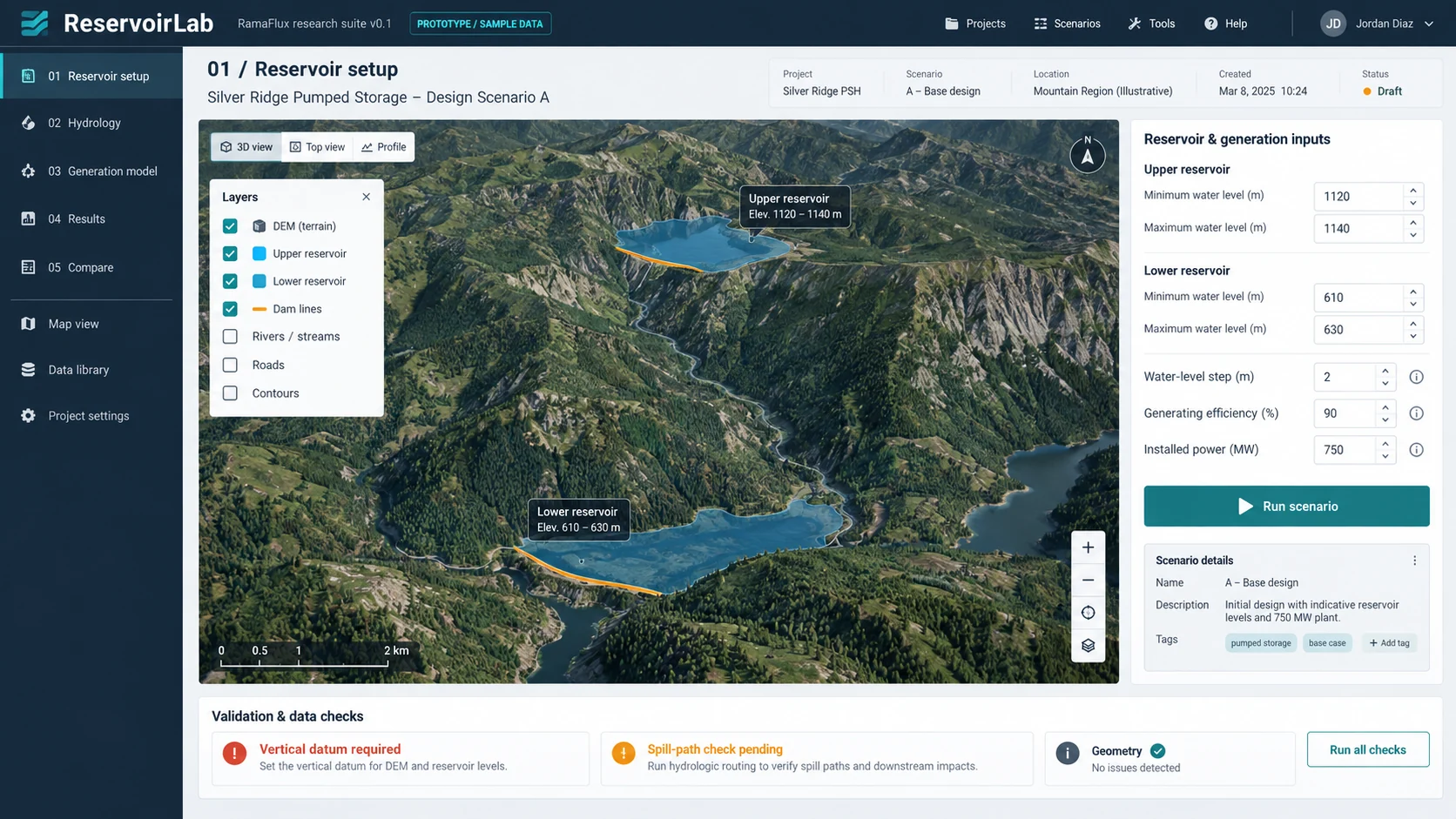
Terrain geometry is not full engineering feasibility. Design parameters, operating conditions and engineering conclusions require appropriate models and specialist studies.